
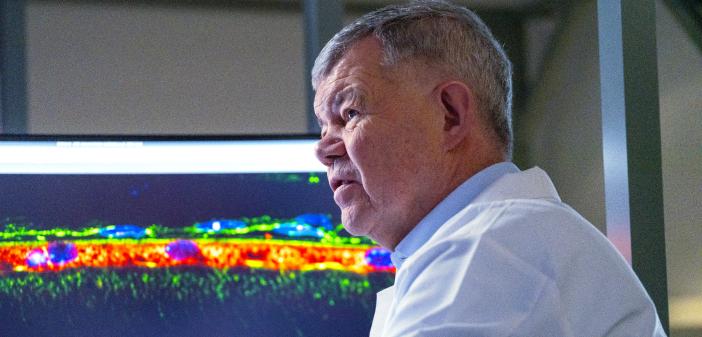
As a senior investigator with NEI’s Intramural Research Program, Dr. T. Michael Redmond has spent decades investigating the visual cycle. His life’s work led to a discovery of a gene mutation associated with a retinal dystrophy called Leber Congenital Amaurosis (LCA). The breakthrough paved the way for a retinal treatment called Luxturna, the first gene therapy to be approved by the FDA for the treatment of an inherited disease.
For families affected by LCA, the impact has been profound. Children who once faced inevitable blindness can now navigate the world with improved light sensitivity, mobility, and independence—outcomes that were unimaginable just a generation ago.
The discovery began in the late 1990s when Dr. Redmond identified and characterized the RPE65 gene. This research demonstrated that this previously undiscovered gene plays a critical role in regenerating the light-sensitive molecules needed for sight. Mutations in this gene were later shown to cause LCA, a rare inherited condition that leads to severe vision loss or blindness in early childhood.
“When we discovered RPE65 it was like a light went on...we knew it was going to be something.”
Dr. Redmond’s NEI-supported research went beyond the discovery of this gene. His laboratory developed animal models that proved restoring RPE65 function could recover visual responses, providing critical evidence that gene therapy could work. These insights laid the scientific foundation for later translational efforts that culminated in Luxturna, a one-time gene therapy that delivers a healthy copy of the RPE65 gene directly to retinal cells.
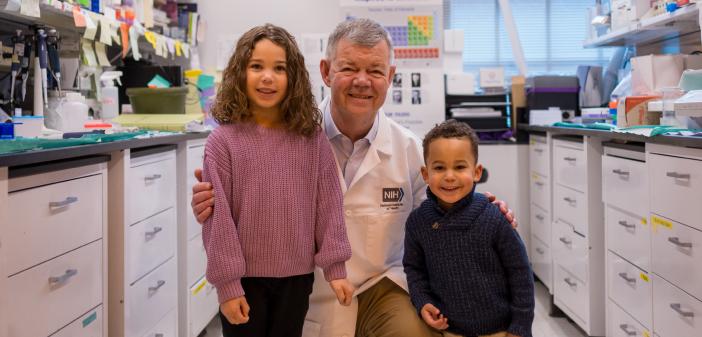
NEI’s long-term investment ensured that Dr. Redmond’s discoveries could be shared openly. This allowed academic researchers, clinicians, and industry partners to build on this discovery, move the therapy into clinical trials and, ultimately, initiate patient care.
Dr. Redmond has reshaped the field of retinal biology and demonstrated that gene-based treatments for blindness are possible, opening the door to new therapies for dozens of other inherited eye conditions now in development. And this impact extends far beyond the retina. The principles uncovered through this research continue to inform gene therapy strategies across medicine, advancing discoveries that benefit both vision science and human health more broadly.
Vision Research in Action
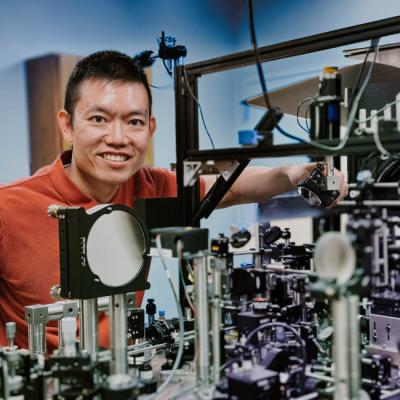
The diagnosis is in the details
Through AI-powered adaptive optics, Dr. Tam and a team of NEI researchers are pioneering ways to bring advanced diagnostic imaging to more patients.