
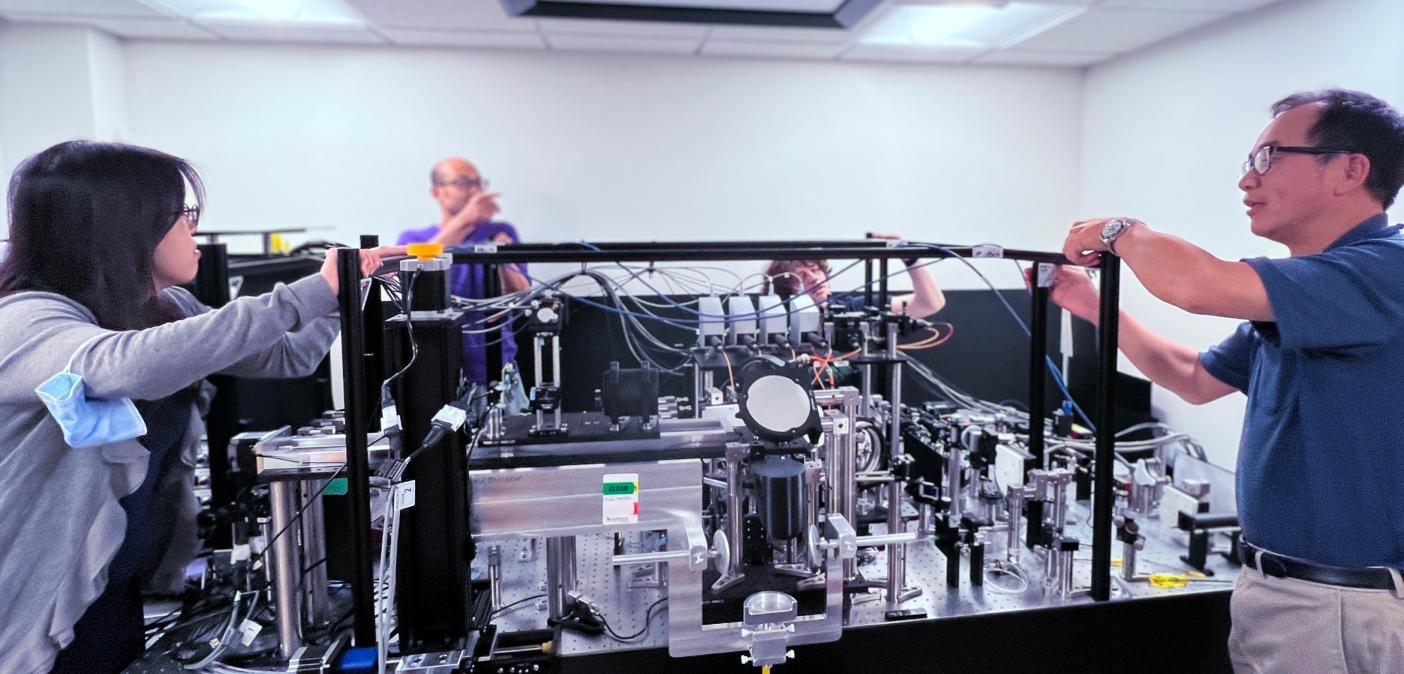
What if a routine eye exam could reveal signs of disease long before symptoms appear? For years, scientists have known that the retina offers a unique window into human health, reflecting changes in blood vessels, nerves, and brain function. Now, researchers at the National Eye Institute (NEI) are helping scientists see the human eye more clearly than ever before, and that clarity could change the future of vision care.
Dr. Johnny Tam and his team are using a powerful imaging technique called adaptive optics to take ultra-sharp pictures of the living retina. These images are precise enough to see individual cells, showing details that were once invisible to researchers and providers.
Previously this technology only existed in highly specialized labs with the equipment and manpower necessary to create and analyze the enormous amount of data this imaging provides.
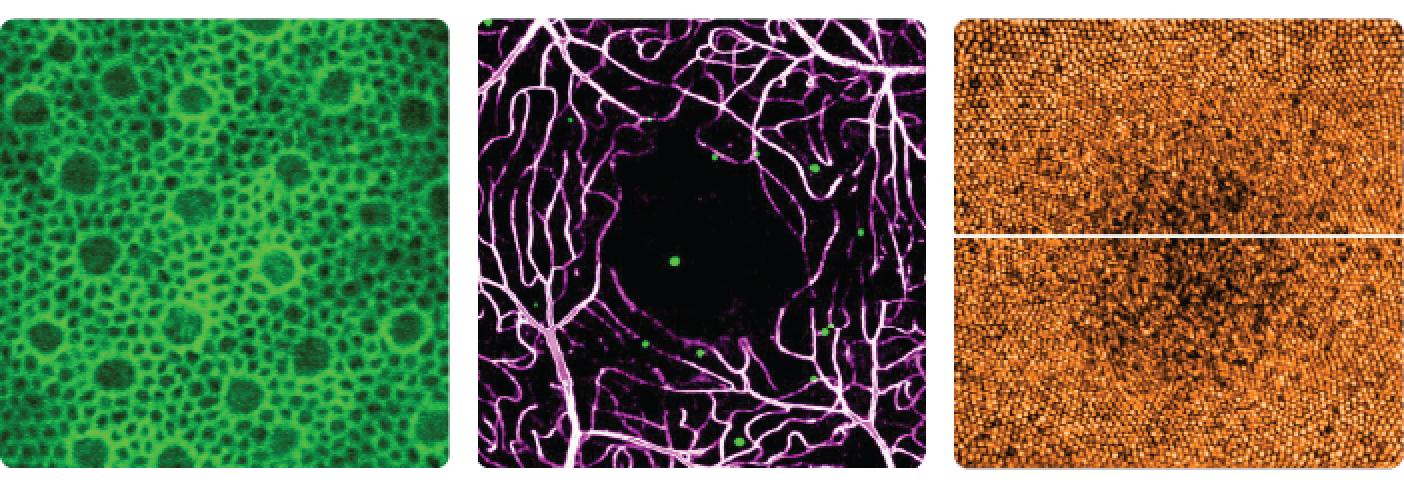
These detailed images of human retina cells were captured using NEI's custom-built adaptive optics ophthalmoscopes. View more in our image gallery.
But thanks to artificial intelligence (AI), Dr. Tam and his team are pioneering ways to bring the power of adaptive optics to more patients.
AI acts like a highly trained assistant. It quickly analyzes thousands of images to spot changes, track diseases over time, and measure the effectiveness of treatments, often earlier and more precisely than the human eye alone could manage.
“The eye is one of the only places in the body where you can noninvasively image a complete tissue—arteries, capillaries, veins, and neurons—all together. Any changes that occur in the body often show up in the eye earlier. It’s like a canary in the coal mine.”
— Dr. Johnny Tam
Adaptive optics and AI can help future generations protect their vision before damage becomes permanent.
Time matters when it comes to eye diseases. Catching diseases like age-related macular degeneration and diabetic retinopathy early leads to more successful interventions and more saved sight.
Over time, AI-powered adaptive optics can also lead to better detection of chronic conditions like Alzheimer's or heart disease through the observance of changes in vascular and neurological tissue.
“I looked into the eye and saw the very cells that see staring right back at me. To walk in year after year and know that you’re seeing something that no human being has ever seen before—that’s what keeps me going.”
— Dr. Johnny Tam
For Dr. Tam, this work is about more than technology; it’s about contributing knowledge that offers hope for the future. He sees each advance as an investment in the next generation — building the foundation for earlier detection, better treatments, and a deeper understanding of how eye health reflects overall human health.
For NEI, it’s another proof point of the impact created by the combination of cutting-edge technology, long term federal investment, and world-class scientists.
The result? Research that sees what has never been seen before, and science that uses that insight to shape the future of medicine.

-
Meet the Researcher: Dr. Johnny Tam
Dr. Johnny Tam is a senior investigator at the National Eye Institute who leads research focused on advanced retinal imaging technologies. His work sits at the intersection of vision science, engineering, and artificial intelligence, helping to transform experimental imaging methods into practical tools that could one day be used in everyday eye clinics. By making it possible to detect disease earlier and more precisely, Dr. Tam’s research aims not only to protect sight, but also to expand the role of eye exams as a powerful tool for understanding overall health.
Vision Research in Action
The Future of Gene Therapy
NEI-funded researchers are discovering new therapies for genetic eye disease, and sharing their findings with the world.