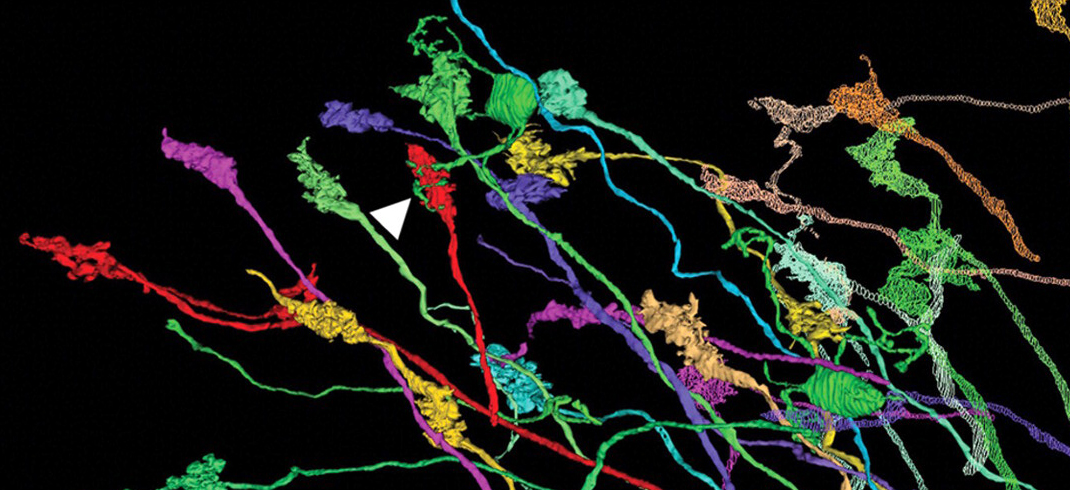
Mature retina is resilient to partial photoreceptor loss
February 22, 2024 — 12:00 pm to 1:00 pm ET
Felice Dunn, Ph.D.
Associate Professor, Department of Ophthalmology
University of California, San Francisco
Hybrid event
National Advisory Eye Council (NAEC)
February 16, 2024 — 8:30 am to 3:00 pm ET
The National Advisory Eye Council (NAEC) comprises 12 external members from the vision community who are charged by law to help guide institute activities. NEI gathers input from members and the public during meetings held three times per year. Council has purview on all NEI matters, including policy, planning, and extramural research programs. Friday, 8:30 a.m. to 3 p.m. ET. Agenda.
Orienting eye movements in dreams and wakefulness
February 1, 2024 — 12:00 pm to 1:00 pm ET
Massimo Scanziani, Ph.D.
Professor/HHMI Investigator
University of California, San Francisco/HHMI
Hybrid event (in-person and online)
Shedding light on inherited eye diseases
January 11, 2024 — 4:00 pm to 5:00 pm ET
Yang Sun, M.D., Ph.D.
Professor of Ophthalmology
Stanford University
Visual NeuroPlasticity Workshop
January 10, 2024 — 10:00 am to 4:00 pm ET
Outcome of Workshop: This workshop revealed multiple mechanisms of NeuroPlasticity, moving well beyond the classic phenomena of long term potentiation and depression (LTP/LTD). Seventeen expert participants reported on studies ranging from retinal to cortical, and from molecular to behavioral. Eight principles were identified:
- Neuroplasticity is driven by biological mechanisms that work to restore the local circuit balance of excitation and inhibition (E/I balance).
- Sensory deprivation acts as a perturbation to the E/I balance.
- Homeostatic processes work toward maintenance of function and they decline with age.
- Non-neuronal cells and gap junctions contribute to and provide structural and molecular support for change.
- Representational shifts occur via polysynaptic reweighting and involve neuronal ensembles.
- Redundancy and reciprocity are hallmarks of resilience and agents for change.
- Polysynaptic reweighting may occur within subcortical structures, and in thalamocortical or corticocortical projections, with the later exhibiting the most obvious adult plasticity.
- Calculated sensory degradation stimuli may encourage neuroplasticity by taking advantage of biological reweighting algorithms.
Read the full analysis in the Visual NeuroPlasticity Workshop Report