
Thanks to the work of NEI scientists and grantees, we’re constantly learning new information about the causes and treatment of vision disorders. Get the latest updates about their work — along with other news about NEI.
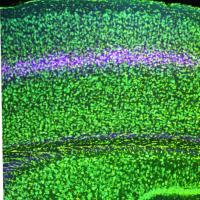
A new National Eye Institute-funded study in mice shows that if the retina of the amblyopic eye is temporarily and reversibly anesthetized just for a couple of days, the brain’s visual response to the eye can be restored even in adulthood.
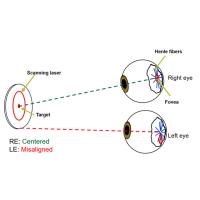
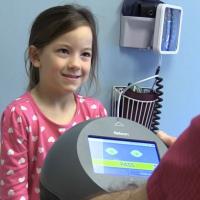
A handheld screening device that detects subtle misalignment of the eyes accurately identifies children with amblyopia (lazy eye), according to a study published in the Journal of American Association for Pediatric Ophthalmology and Strabismus.
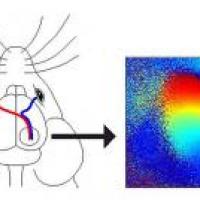
By temporarily suspending retinal activity in the non-amblyopic eye of animal models, neuroscientists restrengthened the visual response in the amblyopic eye, even at ages after the critical period when patch therapy fails.
The NEI has funded development of a handheld pediatric vision scanner that easily and accurately screens for amblyopia, or “lazy eye.” The device could facilitate earlier identification of children who need vision-saving treatment.
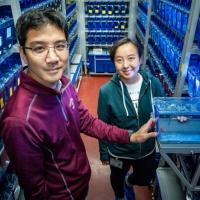
Researchers studying zebrafish have found that genes linked to autism spectrum disorder and other developmental brain abnormalities may be playing a role in people who cannot control their eye movements.
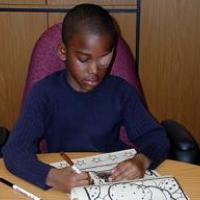
The standard treatment for amblyopia, a condition of poor vision in an otherwise healthy eye, is patching: covering a child’s better-seeing eye with a patch for two hours a day to improve vision in the weaker eye.
Three researchers supported in part by NEI have been elected to the National Academy of Sciences, a nonprofit organization that advises the U.S. government on matters of science and technology.