
Thanks to the work of NEI scientists and grantees, we’re constantly learning new information about the causes and treatment of vision disorders. Get the latest updates about their work — along with other news about NEI.
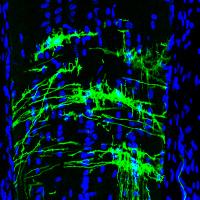
A National Eye Institute-funded study has identified a type of stem cell called a neural progenitor cell, in a region of the optic nerve, which connects the eye to the brain.
Scientists at the University of Wisconsin‒Madison have published a proof-of-concept method to correct an inherited form of macular degeneration that causes blindness, and that is currently untreatable.
University of Michigan researchers have dramatically reduced the power requirements of neural interfaces while improving their accuracy—a discovery that could lead to long-lasting brain implants.
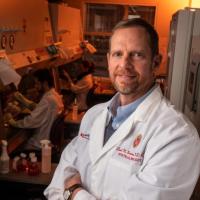
National Institutes of Health Director Francis S. Collins, M.D., Ph.D., has chosen Michael F. Chiang, M.D., as director of NIH’s National Eye Institute (NEI).
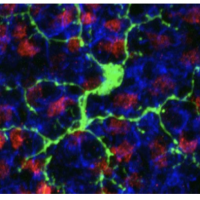
The inflammatory molecule interleukin-17A (IL-17A) triggers immune cells that in turn reduce IL-17A’s pro-inflammatory activity, according to a new NEI study.
Researchers have shown for the first time that when one optic nerve in the eye is damaged, as in glaucoma, the opposite optic nerve comes to the rescue by sharing its metabolic energy.
Researchers have discovered a strategy that can potentially address a major challenge to the current treatment for choroidal neovascularization (CNV), an aggressive form of age-related macular degeneration.
Cerebral (cortical) visual impairment (CVI) is a condition that interferes with the ability of the brain to process information from the eyes, and it has become a leading cause of visual impairment in the U.S.